
Skip to content

Notes From Olympia February 27, Week 7 of the 2026 Legislative Session

Included in this edition: Reba J. Hurn Trivia and Highlights of the Week!

Erica Hallock February 27, 2026
  • Policy and Systems
  • Blog

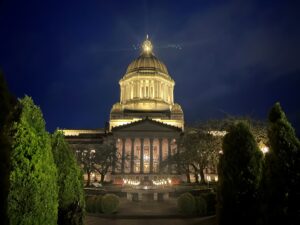
The south-facing entrance of the WA State Legislative Building at night during the seventh week of the 2026 WA State Legislative Session.

All Ready for a Big Week!

(Photo Courtesy: Erica Hallock)

Trivia!

Reba J. Hurn was the first woman to serve in the Washington State Senate as well as the first woman admitted to the Washington State Bar Association. Which county did she represent in the State Senate?

Highlights of the Week

Senate and House Release Respective Budget Proposals

Before we get a recap of the Senate and House budget proposals, a reminder that Start Early Washington produced a comparison of the Senate and House budget proposals. It has been updated to reflect amendments adopted in fiscal committees to Transition to Kindergarten. Feel free to bookmark as we will continue to update throughout the process. Thanks to those who provided helpful feedback – we’ve included your suggested changes.

On Sunday afternoon, the Senate released its proposed $79.3 billion supplemental budget and the House followed shortly thereafter with their $79.2 billion proposal. The Senate’s proposed budget reflects $2.3 billion in increased spending, while the House’s includes $2 billion in additional investments.

Both budgets tap into the state’s Budget Stabilization Account, with the Senate proposing a $750 million transfer and the House an $880 million transfer. As a reminder, because the state’s economic growth is less than 1%, the Legislature can accomplish that transfer by a majority vote.

Budget writers commented that last week’s positive revenue forecast eased their assignment for the moment, but caseload increases and other mandatory cost increases nearly offset these increased revenues.

Check out this recap of the budget rollout in the Washington State Standard, Additionally, you may find this Monday Senate media availability from operating budget writers informative. There were several media questions about the Senate’s approach and rationale for Working Connections Child Care attendance policy changes.

What Comes Next?

On Wednesday, the Senate Ways and Means and House Appropriations Committees weighed potential amendments to their proposed budgets. These amendments ranged from technical clean-ups to legislators looking to insert investments that were excluded from the original proposal. Any adopted amendments that cost money reduce available dollars on the balance sheet.

The Senate is expected to debate and vote its budget off the Floor later today (Friday), and the House is expected to do the same on Saturday. This is another opportunity for amendments to be considered, although the majority party is often reluctant to accept amendments other than technical changes at this juncture.

From there, Senate and House budget writers will meet in “conference committee” to resolve the differences between the bodies’ approaches.

Ideally, this will all come together before the scheduled March 12 Sine Die.

Working Connections Child Care – Comparison of Senate and House Proposals

With the release of the Senate and House budgets, and with public hearings on the bills to make statutory changes to implement the new policies, there’s now a clearer sense of the direction the Senate and House are taking relating to Working Connections Child Care. And while the Senate and House proposals are quite similar, we can expect shifts as the two chambers negotiate the final approach.

Currently, the primary difference between the two bodies lies in their approach to Working Connections Child Care attendance policies and, as summarized in Start Early Washington’s budget comparison document, these differing approaches lead to varied projected savings. The Senate approach to attendance assumes savings of (-$107.17 million) for SFY 27 and the House assumes savings of (-$61.095 million) in SFY 27. Over the four-year budget outlook, that assumed savings grows to (-$426.701 million) for the House approach and (-$682.208 million) for the Senate.

Following is a comparison of the two policy bills to operationalize budget savings in Working Connections Child Care. Please note the House summary is based on the proposed substitute to HB 2689 (Gregerson) that is scheduled to be heard on Thursday, February 26. The accompanying committee materials for HB 2689 includes a fiscal impact chart prepared by committee staff.

Another note – the summary of SB 6353 (Robinson) reflects the latest version of the bill as heard in the Senate Ways and Means Committee on February 19. It does not reflect any amendments the Committee may be considering for adoption.

The Washington State Standard covered these proposed changes in a February 26 article.
SB 6353 (Robinson)

HB 2689 (Gregerson)

Family Income Eligibility

Removes future income eligibility increases from statute; maintains income eligibility at 60% of state median income adjusted for family size.

Removes future income eligibility increases from statute; maintains income eligibility at 60% of state median income adjusted for family size.

Provider Reimbursement Rates

Beginning 7/1/27, rebases subsidy rates to the 75th percentile of the market, maintaining bargaining language for family child care providers.

Beginning 7/1/27, rebases subsidy rates to the 75th percentile of the market, maintaining bargaining language for family child care providers.

Attendance Policy

If a child attends between 1-15 days, a provider can bill for 15 days.

A provider can also bill per day based on attendance past 15 days.

Example: if a child attends 3 days in a month, the provider would bill for 15 days. If another child attended 18 days, the provider would bill for 18 days.

Effective 10/1/26 for child care centers and 7/1/27 for family child care homes.

If a child attends between 1-10 days, a provider can bill for half a month of payment (11 or 11.5 days, depending on length of month)

If a child attends for 11 or more days, a provider can bill for a full month of payment (22 or 23 days, depending on the length of the month)

Specifies absences do not include days a provider is closed for allowable closure days (e.g. holidays)

Effective 10/1/26 for child care centers and 7/1/27 for family child care homes.

Child Care Cost Methodology

References to the child care cost methodology statute Washington State RCW 43.216.829 to align with ESSB 5500 (Alvarado).

References to the child care cost methodology statute Washington State RCW 43.216.829 to align with ESSB 5500 (Alvarado).

Market Rate Study

Not included.

Language encouraging DCYF to achieve provider response rate of at least 50% when conducting market rate study.

Regional Rate Variation

Beginning 7/1/26, licensed or certified providers may not receive a subsidy rate that is different than the rate for the subsidy region in which the provider is located.

Impacts Benton, Clark, Walla Walla and Whitman counties.

Beginning 7/1/26, licensed or certified providers may not receive a subsidy rate that is different than the rate for the subsidy region in which the provider is located

Impacts Benton, Clark, Walla Walla and Whitman counties.

Collective Bargaining

Specifies the scope of Family Child Care bargaining.

Not referenced.

Prospective Payments

Repealed.

Repealed.

Emergency Clause

Impacts provisions of the bill aside from those relating to Family Child Care Homes.

Impacts provisions of the bill aside from those relating to Family Child Care Homes.

Family Income Eligibility

Provider Reimbursement Rates

Attendance Policy

Child Care Cost Methodology

Market Rate Study

Regional Rate Variation

Collective Bargaining

Prospective Payments

Emergency Clause

SB 6353 (Robinson)

HB 2689 (Gregerson)

Removes future income eligibility increases from statute; maintains income eligibility at 60% of state median income adjusted for family size.

Removes future income eligibility increases from statute; maintains income eligibility at 60% of state median income adjusted for family size.

Beginning 7/1/27, rebases subsidy rates to the 75th percentile of the market, maintaining bargaining language for family child care providers.

Beginning 7/1/27, rebases subsidy rates to the 75th percentile of the market, maintaining bargaining language for family child care providers.

If a child attends between 1-15 days, a provider can bill for 15 days.

A provider can also bill per day based on attendance past 15 days.

Example: if a child attends 3 days in a month, the provider would bill for 15 days. If another child attended 18 days, the provider would bill for 18 days.

Effective 10/1/26 for child care centers and 7/1/27 for family child care homes.

If a child attends between 1-10 days, a provider can bill for half a month of payment (11 or 11.5 days, depending on length of month)

If a child attends for 11 or more days, a provider can bill for a full month of payment (22 or 23 days, depending on the length of the month)

Specifies absences do not include days a provider is closed for allowable closure days (e.g. holidays)

Effective 10/1/26 for child care centers and 7/1/27 for family child care homes.

References to the child care cost methodology statute Washington State RCW 43.216.829 to align with ESSB 5500 (Alvarado).

References to the child care cost methodology statute Washington State RCW 43.216.829 to align with ESSB 5500 (Alvarado).

Not included.

Language encouraging DCYF to achieve provider response rate of at least 50% when conducting market rate study.

Beginning 7/1/26, licensed or certified providers may not receive a subsidy rate that is different than the rate for the subsidy region in which the provider is located.

Impacts Benton, Clark, Walla Walla and Whitman counties.

Beginning 7/1/26, licensed or certified providers may not receive a subsidy rate that is different than the rate for the subsidy region in which the provider is located

Impacts Benton, Clark, Walla Walla and Whitman counties.

Specifies the scope of Family Child Care bargaining.

Not referenced.

Repealed.

Repealed.

Impacts provisions of the bill aside from those relating to Family Child Care Homes.

Impacts provisions of the bill aside from those relating to Family Child Care Homes.

Session Schedule Update

We are at the point in the legislative session where it feels like nearly each day brings another cutoff date. Wednesday served as the deadline for bills to pass out of the opposite chamber’s policy committee.

On Thursday, focus turned to fiscal committees as they dove into the remaining bills available for consideration in advance of the Monday, March 2 opposite chamber fiscal committee cutoff. Building on the theme of cutoff after cutoff after cutoff, next week will also bring the opposite house cutoff on Friday, March 6. Mind you that at the same time budget writers are busy negotiating final operating, capital and transportation budgets and legislative leadership is busy whipping votes on “big” bills, including the millionaire’s tax. It’s go time!

As a reminder, each Thursday, Start Early Washington updates its bill tracker with the latest information on bills we are following. If we have missed any bills of interest, please reach out and flag them for us!

Interestingly, next week brings not one, but TWO food related days. For consecutive days, the Capitol campus will be filled with the aroma and offerings of “seafood” and “beef” days. There’s probably some symbolism to be taken from that pairing…

Trivia Answer!

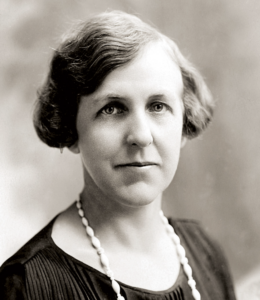
Headshot of Reba Hurn, first woman to serve in the Washington State Senate 1923-1931.

Senator Reba J. Hurn

1881-1967

(Photo Courtesy: Washington State Secretary of Staete)

Senator Hurn represented Spokane County during her two terms in the State Senate.

The Washington State Historical Society document “A Lady in the Senate: The Political Career of Reba Hurn” looks back at her career and features direct quotes from Hurn’s speeches as well as press coverage from her tenure in office to give us a look into what it may have been like for Hurn as the first woman to serve in that body.

Born in Iowa in 1881, Hurn attended college at Northwestern in Illinois and did graduate work at the University of Heidelberg in Germany. She received her law degree from the University of Washington and practiced law in Spokane County.

Long active in Republican politics, including work in New York on the presidential campaign of William Jennings Bryan prior to attending law school, it was not a surprise when Hurn ultimately ran for office. The question was whether she would run for the State Senate or the House of Representatives. Following is Hurn’s description of her rationale for running for the State Senate, as quoted in the Washington Historical Society document:

I have decided to run for the senate rather than the house because there have been five women elected to the house and none have been re-elected. The reason for this is plain. The woman member has been considered a curiosity, written up in papers, observed and reported on every time she raises her voice or puts on a dress. She was there for but one session and the men did not become accustomed to her presence.

In the senate it is different. The state senator serves through two sessions. Perhaps I will be a novelty for a while but by the close of the first session they will be in the habit of taking me for granted, and by the time the second session comes around I shall have a foothold and be capable of worthwhile constructive work. My handicap at the first session attended will be no greater than that of a man, as what senator takes an outstanding role at his first session?

During her first campaign, Hurn famously said, “I have no causes. I am in favor of no reforms, unless it would be enactment of fewer laws and more concentration on codifying the mass of legislation which has been piling up in this state for years.”

Saying she had no causes wasn’t entirely true. Throughout her time in elective office, she remained fiercely in favor of Prohibition, proudly declaring she was “third generation ‘dry.’” She was also tight with the purse strings and looked to avoid increased state expenditures at any opportunity.

In 1922, Hurn defeated George Belt 2,697 votes to 1,299 to begin her elective career representing the 7th Senatorial District. When she arrived in Olympia, she found she did not have anywhere to store her coat or hat as the men’s cloakroom was off-limits to women. She considered wearing her hat on the Floor, but she decided against that because she never wore a hat when she was in court. In the end, the press offered her a space in the press office for her items. Not surprisingly, the Senate did not have a woman’s restroom at that time either. Of course the Senate Cherberg Office Building referenced in a recent Trivia was not constructed in the early 1920s, so Senators did not have personal office space.

The open smoking of cigars on the Senate Floor was a practice during that era and, in recognition that a woman had joined their ranks, the male Senators added a box of candy to the regular distribution of cigars passed around among Senators on the Floor. Presumably, Senator Hurn would be included in the ritual with candy while the male Senators enjoyed a cigar? And now I’m wondering how many years it took to get the cigar smoke out of those chambers.

It was important to Senator Hurn that she not be treated differently than her male peers. During her 1926 re-election campaign Hurn was quoted as saying, “People often think of me as the woman’s senator, … as though I represented women alone. I have always considered myself as the representative of my entire district and not of its women residents only. I have always dreaded being a woman’s minority at Olympia. After all, there are no woman’s issues.”

Press coverage of Senator Hurn often included references to her attire, including this January 1925 Spokane Woman article which gave more attention to her clothing than her remarks to the Young Men’s Republican’s Club: “A new black satin gown, the skirt of which is beaded in various shades of blue which she will wear at the opening session of the legislature…. One of the chief charms of Spokane’s woman senator is that she is essentially feminine, as the wardrobe which she is taking to Olympia will attest.”

Senator Hurn did chair a committee, not surprisingly, the Senate Public Morals Committee. She was, however, not limited to the traditional “women’s issue” committees and served on the Senate Appropriations Committee where she was able to put into practice her “tighten the purse strings” positions.

In 1925, Senator Hurn took on newly elected Governor Hartley on child labor issues, siding with Congress as they were looking to regulate the labor of persons under 18 years of age. Despite having served in the Senate for two years, Hurn delivered her first floor speech on this issue, forcefully stating “… do we believe children of 14 years of age or 16 years of age ought to work in mines, mills, or factories? I don’t know how many are working in such places and I don’t care – if there is one, that is too many.” Her remarks were met with applause. Coverage of her remarks also included coverage of her clothing worn that day.

In 1930, Senator Hurn ran for her third term on the following platform: 1) continuation of Prohibition; 2) opposition to state-funded pensions because “a legislator should not be philanthropic with other people’s money; and 3) supportive of a state income tax because it is “… the only fair way to tax intangibles.”

Senator Hurn lost in the 1930 primary, largely due to the nationwide turn toward Democrats and her district’s opposition for her desire to get rid of the township system of county government. She never served in public office again, but she did return to her law practice and traveled the world extensively up until her death.

Sources

Washington Historical Society

Washington State Legislature: Political Pioneers

About the Author

Erica Hallock

Senior Advisor, Start Early Washington

More About Erica

More Like This

Contact Us

Connect with our team to learn more about our work or discuss how we can support policy and advocacy work for your organization.

Email Us

Washington State icon

Washington State Hub

Learn more about our work in Washington state and access relevant resources and publications. 

View Hub

Let's talk icon

Stay Connected

Stay up to date on the latest early childhood policy updates from Olympia.

Sign Up