
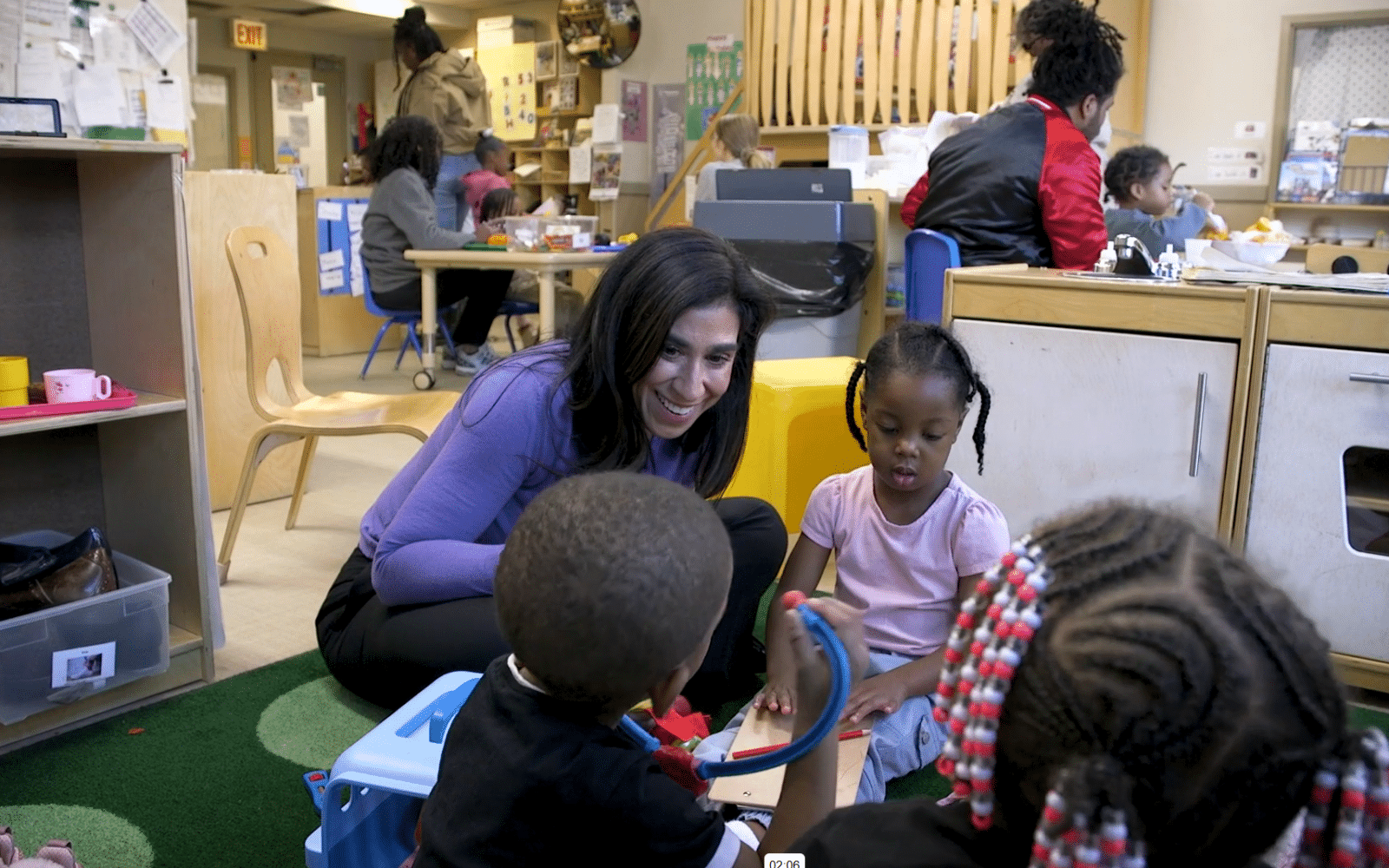
High-quality early learning and care starts with understanding the children and families they serve. That means recognizing and valuing their home language, cultures and lived experiences. Culturally and linguistically responsive care is an essential part of effective early learning because it creates environments where children can thrive and gives families a meaningful role in their children’s learning.
Why Culturally Responsive Care Matters
From across the country, families shared how their experiences with early learning programs had an immense impact on their lives. Their stories made it clear that effective care is so much more than preparing a child for school. It is also about creating an environment where children and families feel understood, valued and supported.
Jenn Acosta, a Head Start alum, grew up in a Spanish-speaking, low-income household in New Jersey. She shared, “Head Start is where I learned English, and where my parents, new immigrants to the US, built community and learned to navigate this new country.”
For Acosta and her family, Head Start was a place where her family’s culture was integrated into her learning experience. A child’s language and family are an important part of who they are and early learning programs play a critical role in recognizing and valuing that. Quality care ensures every child’s unique learning and developmental needs are nurtured and met.


